Why Am I Feeling More Anxious and Irritable Lately?
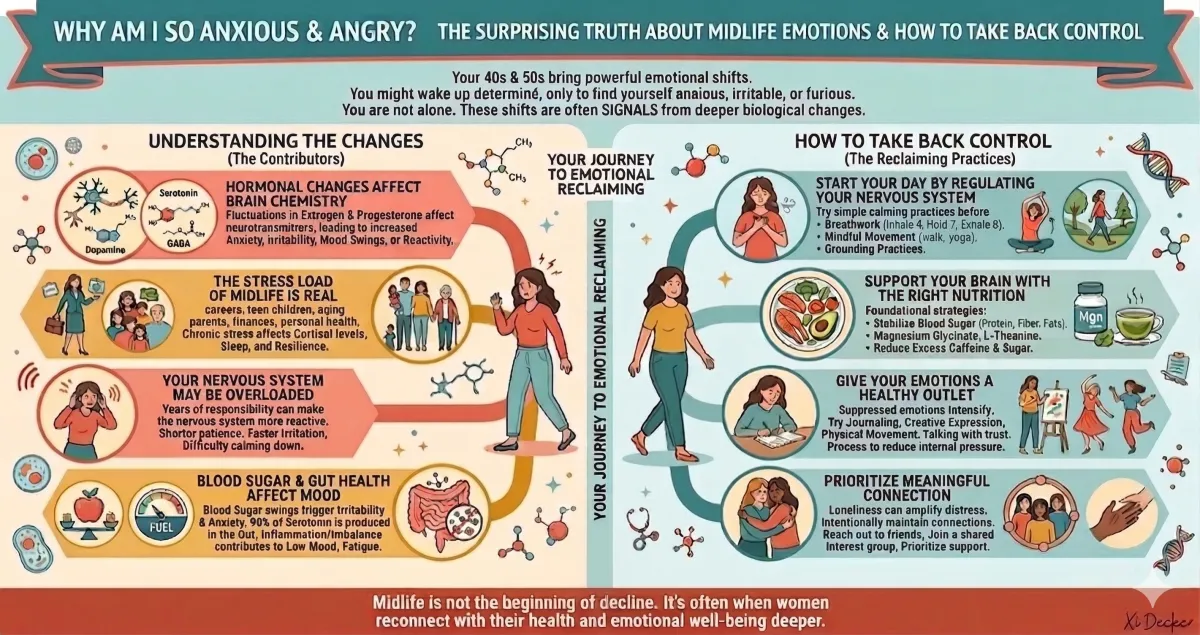
Why Am I So Anxious and Angry?
The Surprising Truth About Midlife Emotions—And How to Take Back Control
Your 40s and 50s can be a time of incredible transformation.
But they can also bring emotional shifts that feel confusing, unpredictable, and sometimes overwhelming.
You might wake up determined to have a good day—only to find yourself suddenly feeling anxious, irritable, or unusually angry. Small things that never used to bother you suddenly feel like too much. Your patience feels thinner. Your emotions feel closer to the surface.
And you may find yourself wondering:
What is happening to me?
If this sounds familiar, you’re not alone.
Many women in midlife experience heightened anxiety, mood swings, and emotional intensity—even when life appears “good” on the outside.
The good news is this: these emotional shifts are not random, and they’re not a sign that something is wrong with you.
They are often signals that your body is going through deeper biological changes.
Understanding those changes is the first step toward reclaiming your emotional balance.
Why Anxiety and Anger Often Increase in Midlife
Emotional changes during midlife are rarely just about stress or life circumstances.
More often, they’re influenced by a combination of biological, neurological, and lifestyle factors that begin shifting during this stage of life.
Let’s look at some of the most common contributors.
1. Hormonal Changes Affect Brain Chemistry
Even before menopause, fluctuations in estrogen and progesterone begin affecting the brain.
These hormones influence key neurotransmitters such as:
Serotonin, which affects mood and emotional stability
Dopamine, which supports motivation and pleasure
GABA, which helps calm the nervous system
When hormone levels fluctuate, these neurotransmitters can shift as well.
The result may look like:
Increased anxiety
Irritability
Mood swings
Feeling emotionally reactive or overwhelmed
This is one reason many women report feeling emotionally different during perimenopause—even if their life circumstances haven’t changed.
2. The Stress Load of Midlife Is Real
Midlife often brings a unique convergence of responsibilities.
Many women are simultaneously managing:
Careers and professional demands
Teenagers or young children
Aging parents
Financial pressures
Personal health changes
This “sandwich generation” dynamic can create a chronic stress load that the body must continuously manage.
Over time, that stress can affect cortisol levels, sleep quality, and emotional resilience.
3. Your Nervous System May Be Overloaded
Another piece of the puzzle involves the nervous system.
Years of stress, responsibility, and constant stimulation can make the nervous system more reactive.
When this happens, the body may shift more easily into fight-or-flight mode.
This can make emotional reactions feel stronger and quicker than they used to be.
You may notice things like:
Shorter patience
Faster irritation
Feeling “on edge” more often
Difficulty calming down after stress
These responses are not personality flaws—they’re physiological stress responses.
4. Blood Sugar and Gut Health Affect Mood
What happens in your body metabolically also influences your emotional state.
Two areas that often impact mood are blood sugar regulation and gut health.
Blood sugar swings can trigger:
Irritability
Anxiety
Brain fog
Sudden energy crashes
Meanwhile, the gut plays a major role in mood regulation.
About 90% of serotonin is produced in the gut, meaning digestive health can significantly influence emotional stability.
When the gut is inflamed or imbalanced, it can contribute to:
Low mood
Anxiety
Fatigue
Cognitive fog
How to Reclaim Your Emotional Balance
The goal isn’t to “fix” yourself.
Because you’re not broken.
Instead, the goal is to support your body in ways that help restore balance.
Small daily practices can make a meaningful difference.
1. Start Your Day by Regulating Your Nervous System
Instead of jumping straight into emails, responsibilities, and mental stimulation, begin the day with simple practices that calm your nervous system.
Helpful options include:
Breathwork
Try a simple pattern: inhale for 4 seconds, hold for 7 seconds, exhale for 8 seconds. Repeat several times to reset your stress response.
Mindful Movement
A short walk, stretching, or gentle yoga can release tension and improve mood.
Grounding Practices
Spending a few minutes outside, feeling the sun on your face, or slowly sipping tea can help bring the body out of stress mode.
Even five to ten minutes can help shift how your day unfolds.
2. Support Your Brain With the Right Nutrition
Your brain requires specific nutrients to regulate mood effectively.
A few foundational strategies include:
Stabilize Blood Sugar
Eat meals that include protein, fiber, and healthy fats to prevent mood-destabilizing blood sugar swings.
Magnesium Glycinate
This form of magnesium can support relaxation, sleep, and nervous system balance.
L-Theanine
A compound found in green tea that promotes calm without sedation.
Reduce Excess Caffeine and Sugar
Both can intensify anxiety and irritability when consumed in large amounts.
3. Give Your Emotions a Healthy Outlet
Many women are conditioned to push through their emotions instead of expressing them.
But suppressed emotions often intensify over time.
Healthy outlets may include:
Journaling your thoughts and feelings
Creative expression like art, music, or dance
Physical movement or exercise
Talking openly with someone you trust
Processing emotions reduces the internal pressure that builds when feelings stay bottled up.
4. Prioritize Meaningful Connection
Loneliness can amplify anxiety and emotional distress.
Midlife is often when friendships shift or become less frequent due to busy schedules.
Maintaining connection may require more intention.
Consider:
Reaching out to a friend you haven’t spoken to recently
Joining a community or group with shared interests
Prioritizing relationships that energize and support you
Human connection is one of the most powerful emotional stabilizers we have.
You’re Not Alone
If you’ve been feeling more anxious, irritable, or emotionally overwhelmed in midlife, know this:
You’re not imagining it.
You’re not overreacting.
And you’re certainly not alone.
These emotional shifts are incredibly common during this stage of life—but they’re also manageable when you understand what’s happening inside your body.
Midlife is not the beginning of decline.
It’s often the moment when women begin reconnecting with their health, their needs, and their emotional well-being in a deeper way.
And with the right support, you can feel like yourself again—calm, clear, and in control.
Have you noticed changes in your anxiety, mood, or emotional resilience during midlife?
What has helped you the most?
Share your experience in the comments. Conversations like these help more women realize they’re not navigating this stage of life alone. 💛